SPIN GROUP

SPIN Group

Research

From physics-based sensing to interpretable machine learning: turning raw sensor data into decisions about material health.

Our Research Vision

The SPIN Group develops computational methods that transform raw sensor data into actionable knowledge about material health. Our research sits at the intersection of physics-based sensing, signal processing, and machine learning, enabling intelligent, automated inspection systems that scale across modalities and applications.

Research Themes

Three interconnected pillars that define our approach to computational NDE

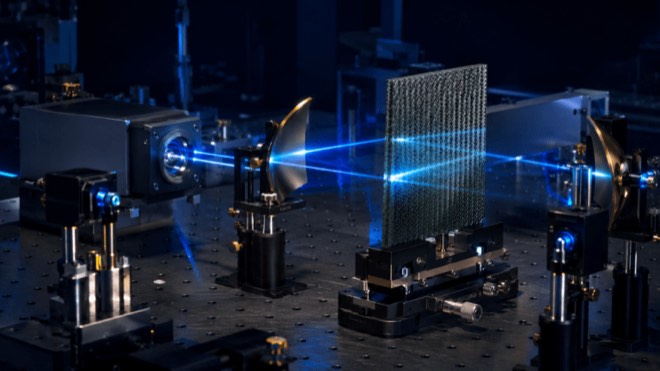
Illustration: physics-based sensing

Physics-Based Sensing & Signal Processing

We acquire and process data from terahertz, ultrasonic, and X-ray modalities. Our focus is on extracting physics-informed features, time-of-flight, spectral content, attenuation maps, that capture the signatures of subsurface damage.

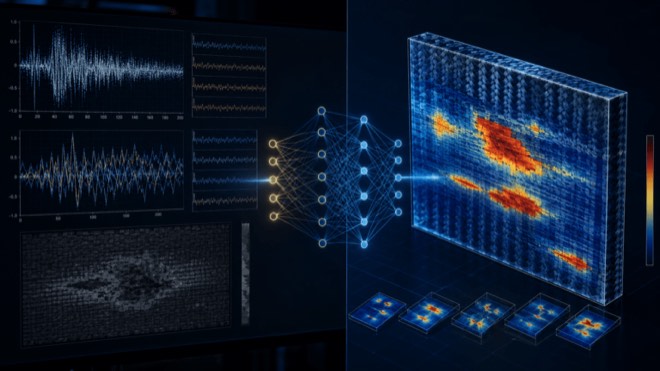
Illustration: AI for inverse problems

Machine Learning for NDE

We develop weakly supervised and self-supervised learning frameworks that reduce reliance on manual annotation. Our pipelines combine classification, localization, and quantification, from Grad-CAM pseudo-labels to physics-informed feature maps.

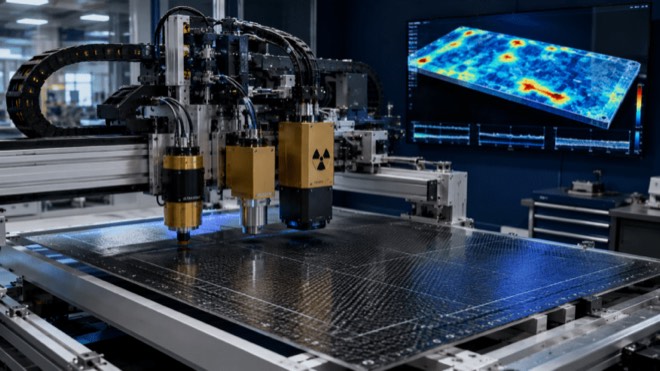
Illustration: intelligent inspection systems

Cross-Modal Validation & Deployment

We benchmark AI-driven inspection across modalities using X-ray ground truth, and build end-to-end pipelines designed for real-world deployment, from laboratory prototyping to field-ready systems.

Sensing Modalities

Multi-modal data acquisition and cross-validation for robust damage characterization

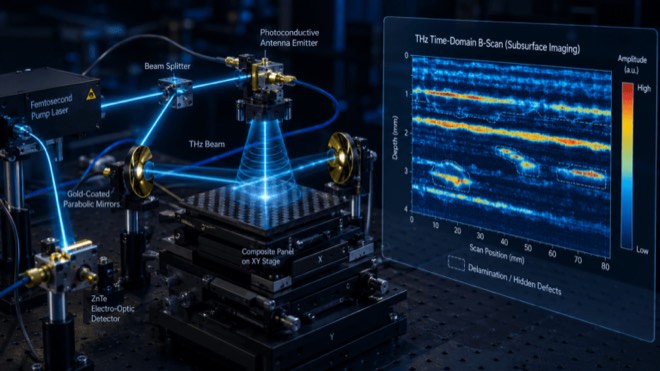
Illustration: terahertz sensing modality

Terahertz (THz)

Time-domain spectroscopy & imaging

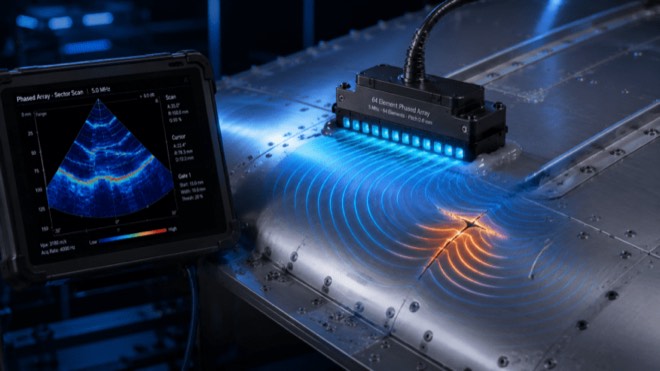
Illustration: ultrasonic sensing modality

Ultrasonics

Phased-array & guided wave inspection

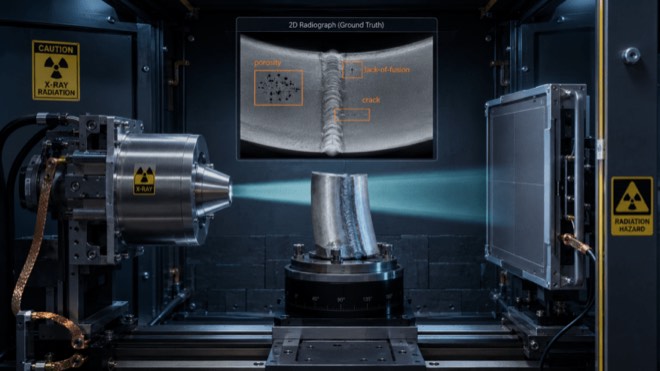
Illustration: X-ray sensing modality

X-Ray

Radiographic ground truth & validation

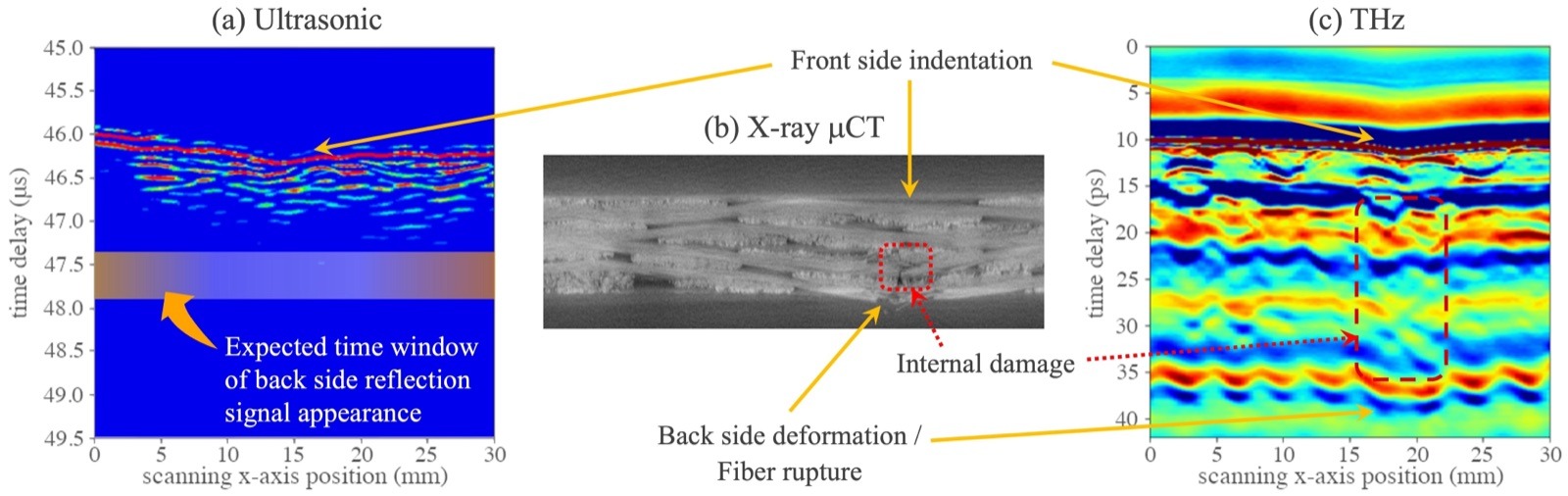
The same impact damage imaged by ultrasonic testing, X-ray micro-computed tomography, and terahertz imaging
One impact, three views: the same subsurface damage captured by (a) ultrasonic testing, (b) X-ray micro-computed tomography, and (c) terahertz imaging.

Application Domains

Sectors where intelligent nondestructive evaluation delivers safety and reliability

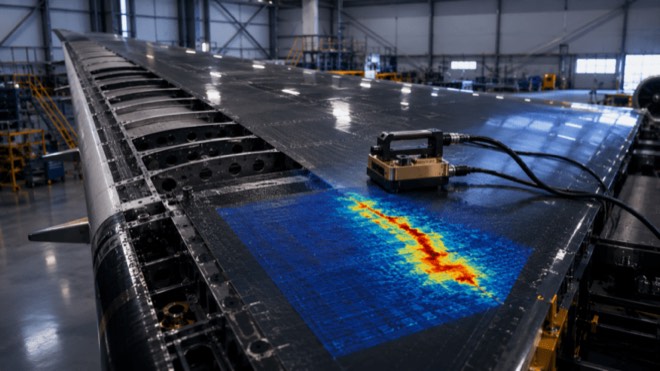
Illustration: Aerospace applications

Aerospace

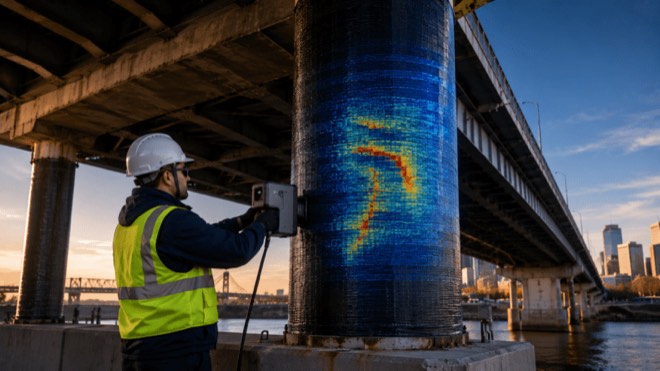
Illustration: Civil Infrastructure applications

Civil Infrastructure

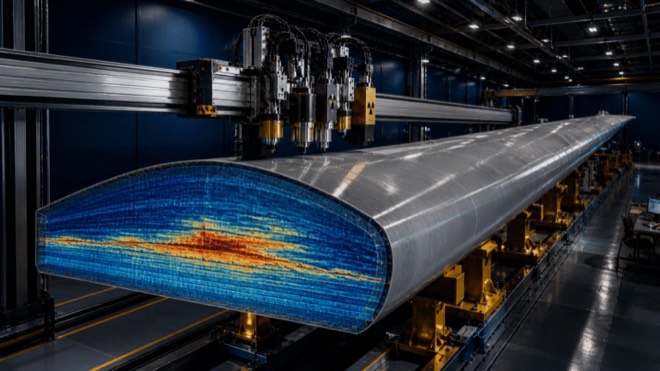
Illustration: Wind Energy applications

Wind Energy

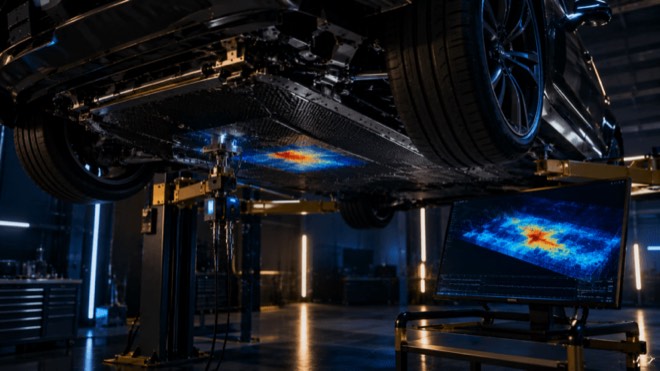
Illustration: Automotive and EV applications

Automotive & EV

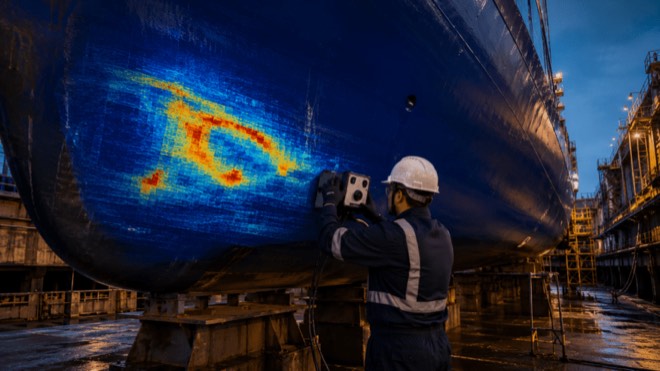
Illustration: Marine and Offshore applications

Marine & Offshore

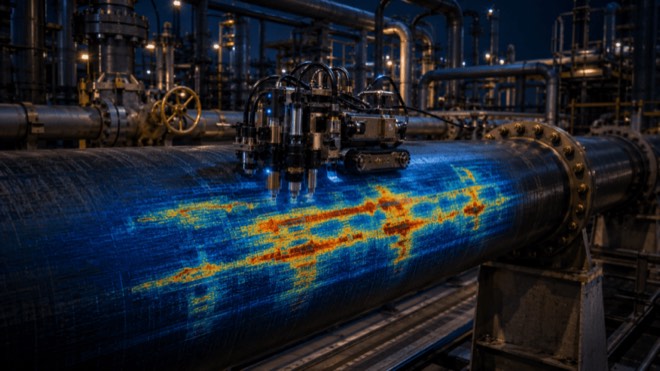
Illustration: Energy and Pipelines applications

Energy & Pipelines

Featured Projects

Selected ongoing and recent research

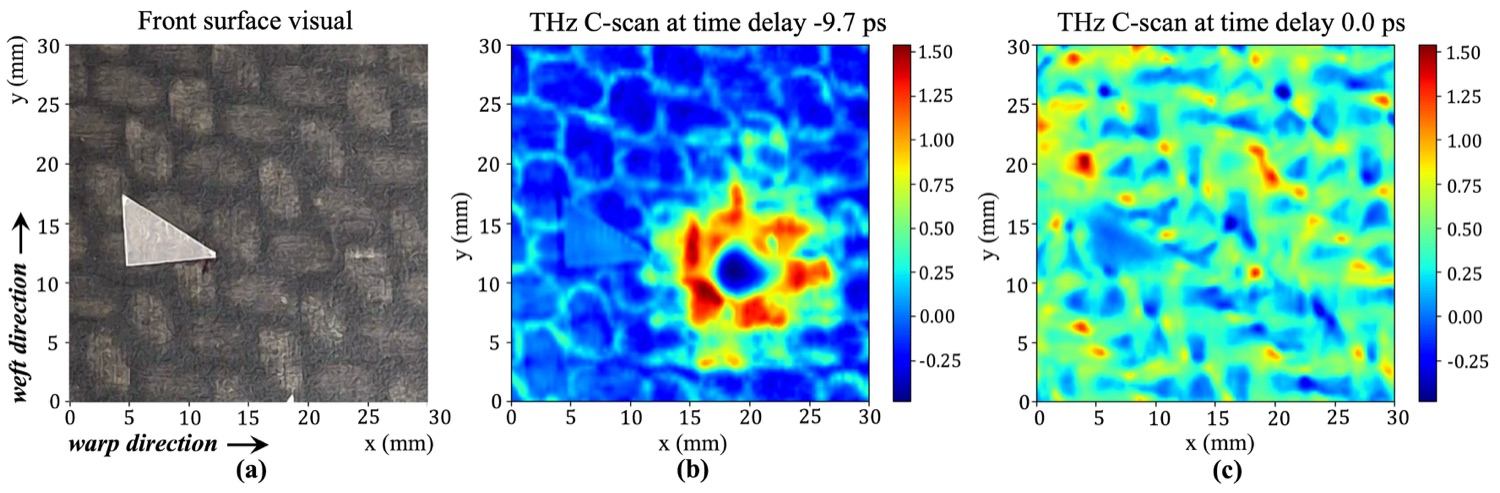
Terahertz C-scans revealing subsurface impact damage invisible on the specimen surface
THz · DenseNet · BVID

BVID Detection in Woven GFRP Laminates

Transfer learning with a DenseNet-121 backbone classifies barely visible impact damage (BVID) in woven glass-fiber composite plates directly from terahertz time-of-flight B-scans. Ground truth is established by X-ray micro-computed tomography on a controlled low-velocity impact test bed, providing a reproducible benchmark for downstream localization and severity studies.


DenseNet-121 accuracy = 99.1%

Status: publication link to be added
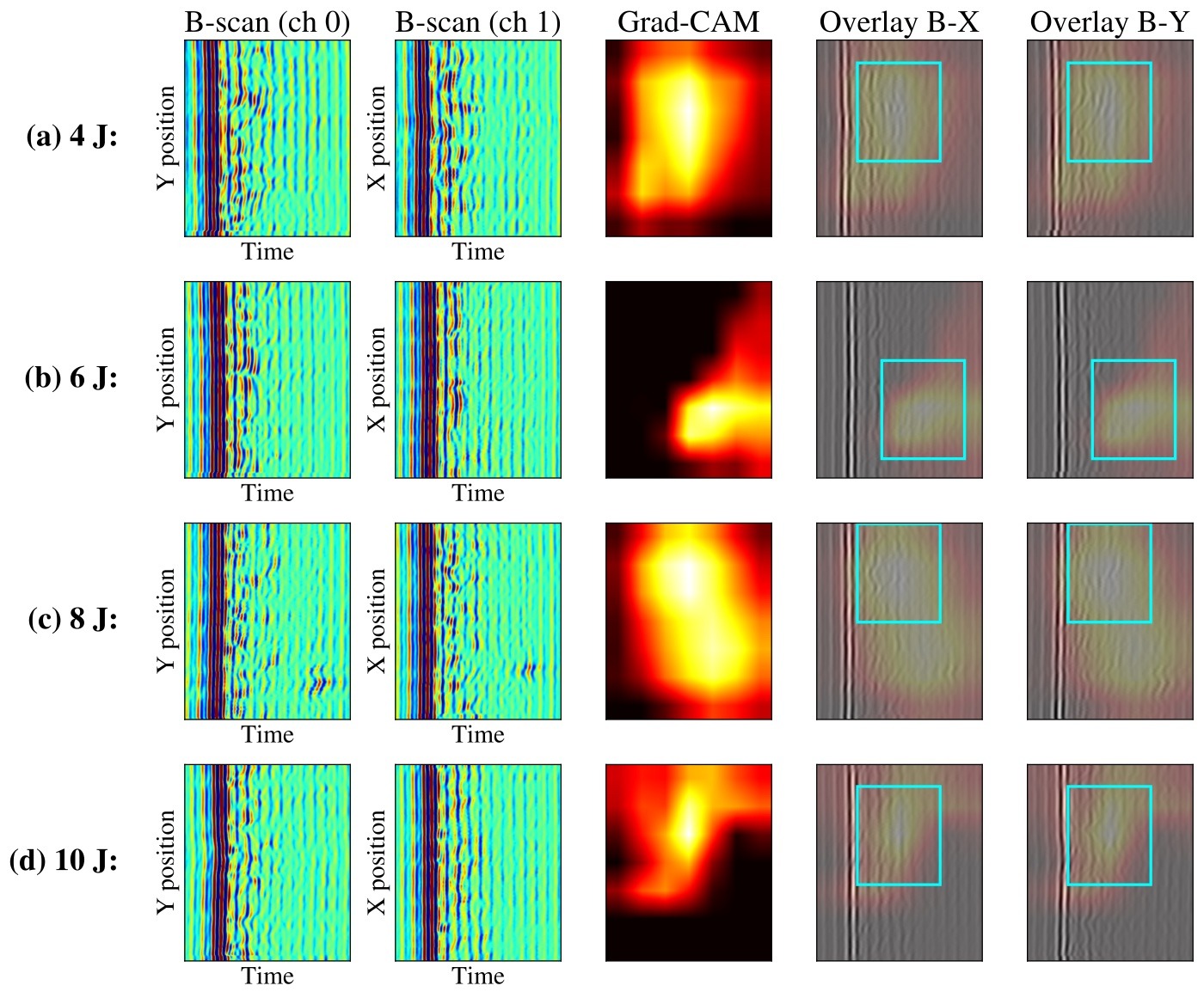
Grad-CAM attention maps localizing impact damage on terahertz B-scans across impact energies
Grad-CAM · Abaqus · MEEP

Physics-Guided Weakly Supervised Damage Localization

A modality-agnostic pipeline pretrains on synthetic data from coupled Abaqus/Explicit impact simulations and MEEP electromagnetic forward models. Gradient-based saliency is converted into pseudo-labels and a quantitative severity output, removing the need for pixel-level human annotation. The same network transfers without modification from terahertz to X-ray imagery of impacted GFRP laminates.


Sim-to-real transfer · zero retraining

Status: OTST 2026 abstract submitted · manuscript in preparation
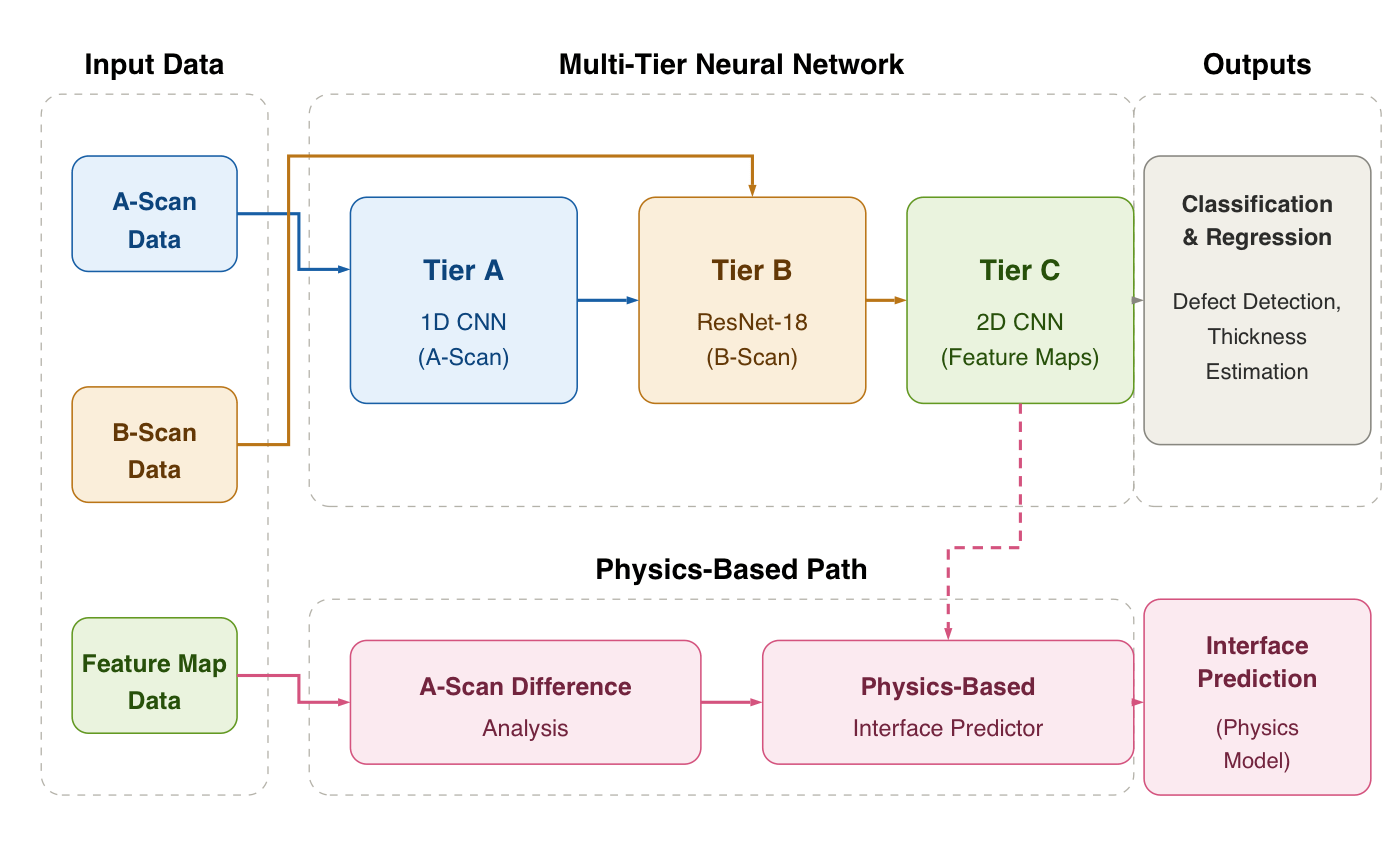
Multi-tier neural network architecture combining CNN tiers with a physics-based interface predictor
FDTD · Multi-Task · Profilometry

Multi-Task Subsurface Profilometry from FDTD-Synthetic THz

A three-tier multi-task network trained on one-dimensional FDTD simulations jointly predicts defect presence, interface index, ply count, defect thickness and diameter, and per-ply thicknesses with uncertainty-weighted losses. A calibrated physics-based predictor lifts interface localization accuracy from ≈14% to 91.6%, and the full pipeline transfers cleanly to an external GFRP benchmark.


Interface accuracy 14% → 91.6%

Status: manuscript in preparation

Research Directions

Where the group is heading next

Multimodal Sensing

Fusing terahertz, ultrasonic, and X-ray data so each modality compensates for the blind spots of the others.

Physics-Informed Machine Learning

Embedding wave physics, material models, and simulation priors directly into learning architectures for trustworthy, generalizable NDE.

Weakly Supervised Defect Localization

Pixel-level damage localization from scan-level labels, using saliency, pseudo-labels, and simulation-driven supervision.

Real-Time Inspection Systems

Algorithms and architectures that move diagnosis from offline analysis to in-situ, real-time decision making.

Digital Twins for NDE

Simulation-backed digital replicas of structures and sensing systems for predictive maintenance and structural health monitoring.

Cybersecure Intelligent Inspection

Security frameworks for sensing and data pipelines that protect the integrity of diagnostic decisions in deployed systems.